Youth Soccer Drills That Actually Build Better Players
Every player wants to get better. The question is how.
More time on the ball is the single biggest factor in youth soccer development -- and the drills that give players the most quality touches in the least amount of time are the ones that actually move the needle. Here's a breakdown of the drills that matter most, and why the environment you practice in makes all the difference.
Ready to see what focused training looks like? Book your free first session at TOCA Soccer.
Why Drills Matter More Than Scrimmages
A typical youth soccer game gives a player somewhere between 15 and 30 meaningful touches on the ball. That's not a lot of repetition for building real skill.
Purposeful drills flip that equation. Done right, they stack up touches quickly, create the kind of muscle memory that holds up under pressure, and develop the decision-making speed that separates good players from great ones.
The goal isn't to drill for the sake of drilling. It's to simulate game-like situations, over and over, until the right response becomes automatic.
First Touch Drills
A good first touch buys a player time and space. A poor one gives the ball away before anything else can happen.
First touch drills focus on receiving the ball cleanly at varying speeds and angles -- the kind of variation that mirrors what actually happens in a match. Players work on controlling balls played to their feet, their chest, and in the air, and they practice redirecting the ball in the direction they want to go rather than just stopping it.
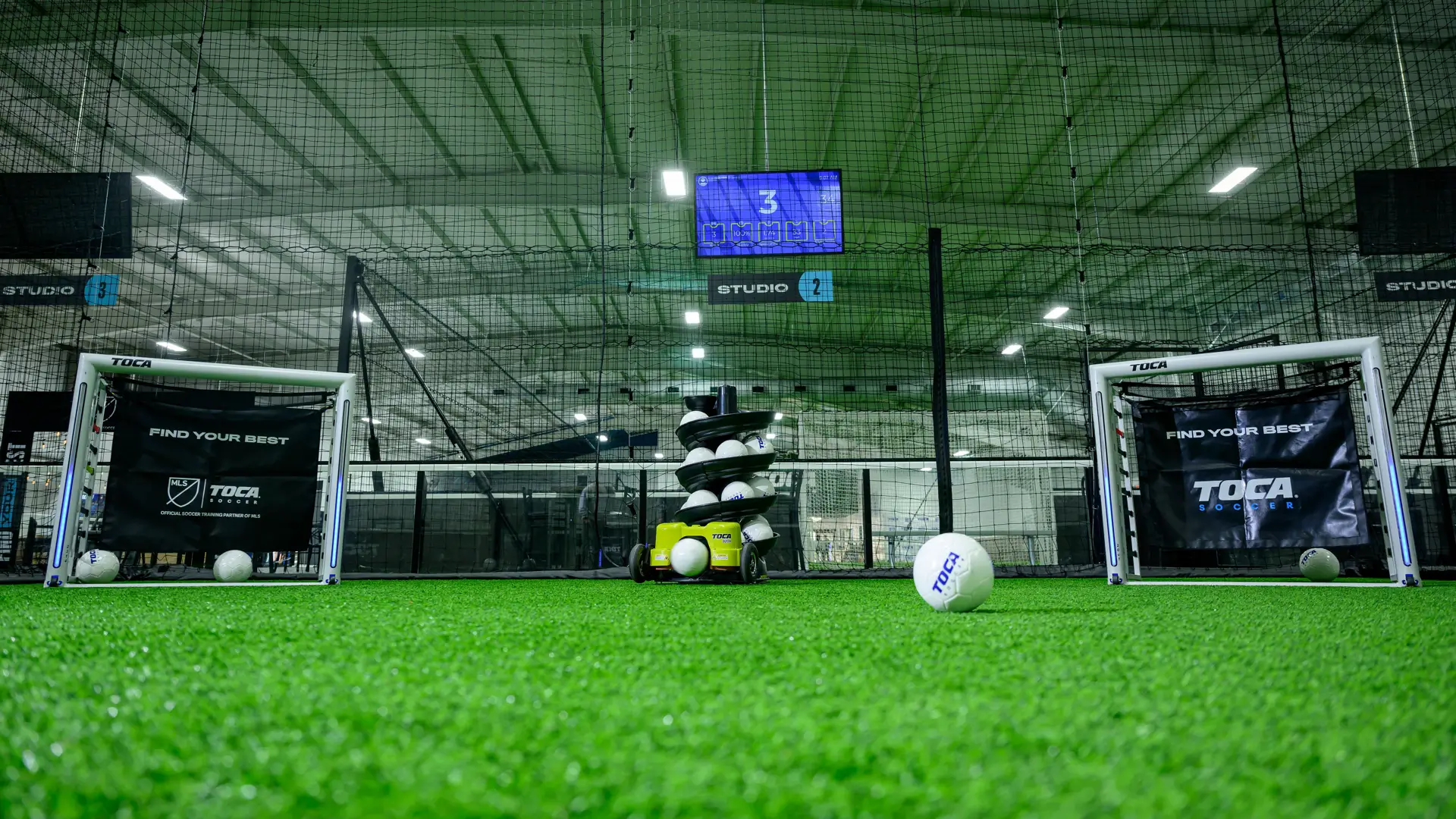
At TOCA, the Touch Trainer delivers balls at different speeds and trajectories, giving players around 200 quality touches per session. That's roughly 10 times what a typical game provides -- and it's why players who train here develop their first touch faster than those who only practice in team settings.
Dribbling Drills
Dribbling is how players navigate pressure and create space. The best dribbling drills don't just teach a player to move with the ball -- they teach them to read defenders and make quick decisions about when to go and when to hold.
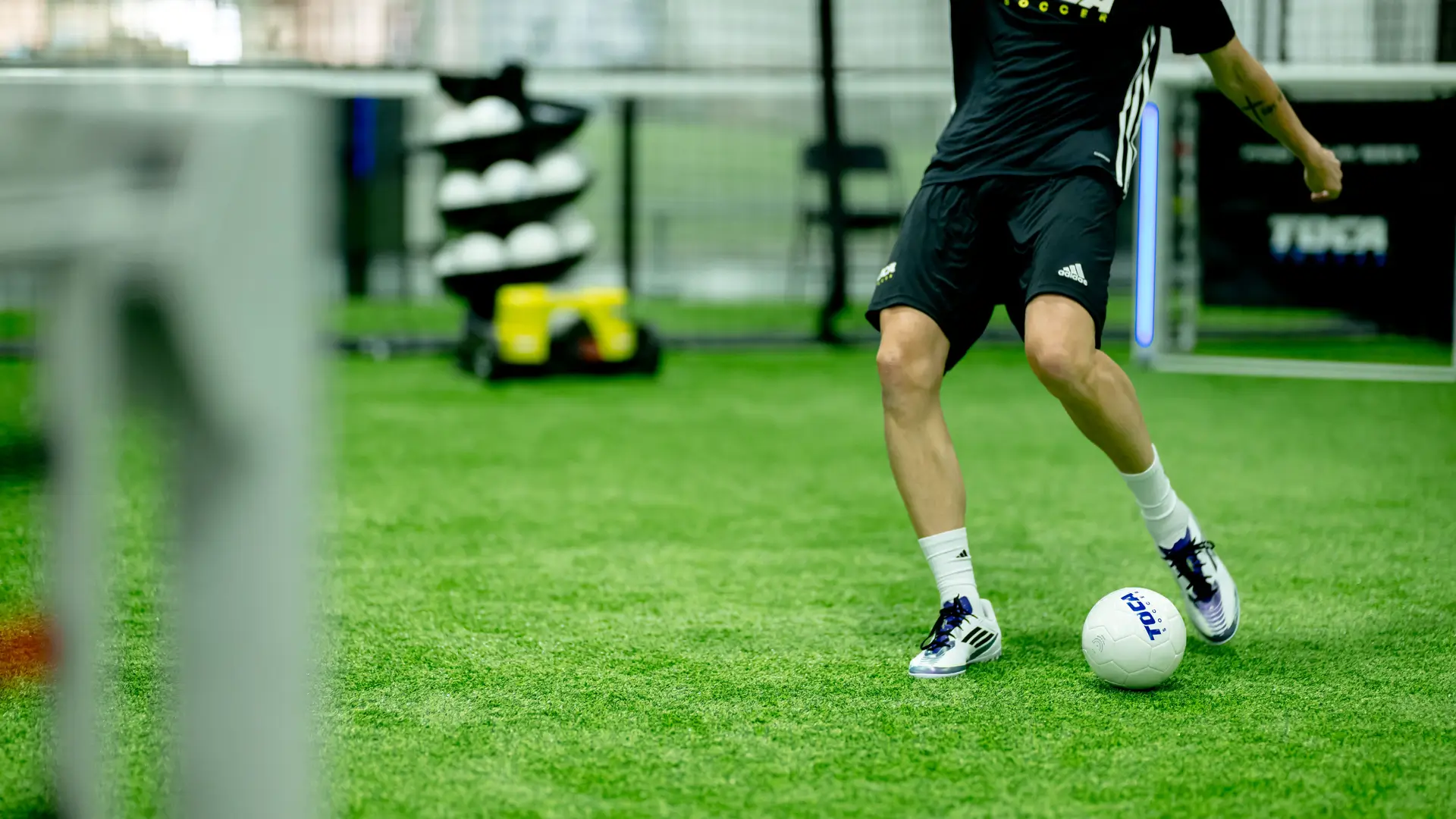
Cone drills build close control and change of direction. One-on-one scenarios build the confidence to take on defenders. And speed dribbling drills develop a player's ability to push the ball forward at pace without losing control.
The key is variety. Players who only practice slow, methodical dribbling don't develop the explosiveness and unpredictability that actually works in games.
Passing Drills
Passing is the engine of team soccer. Short passing drills build accuracy and quick thinking in tight spaces. Long passing drills develop the awareness and technique to switch the field and connect with teammates across distance.
Wall passes and one-touch drills are especially valuable for younger players -- they build the quick decision-making and communication habits that make a player easy to play with.
The goal of passing drills isn't just technical. It's teaching players to see the game ahead of time, so the right pass is already in their head before the ball arrives.
Shooting Drills
Finishing is what games are decided on, and it's one of the areas where targeted practice pays off fastest.
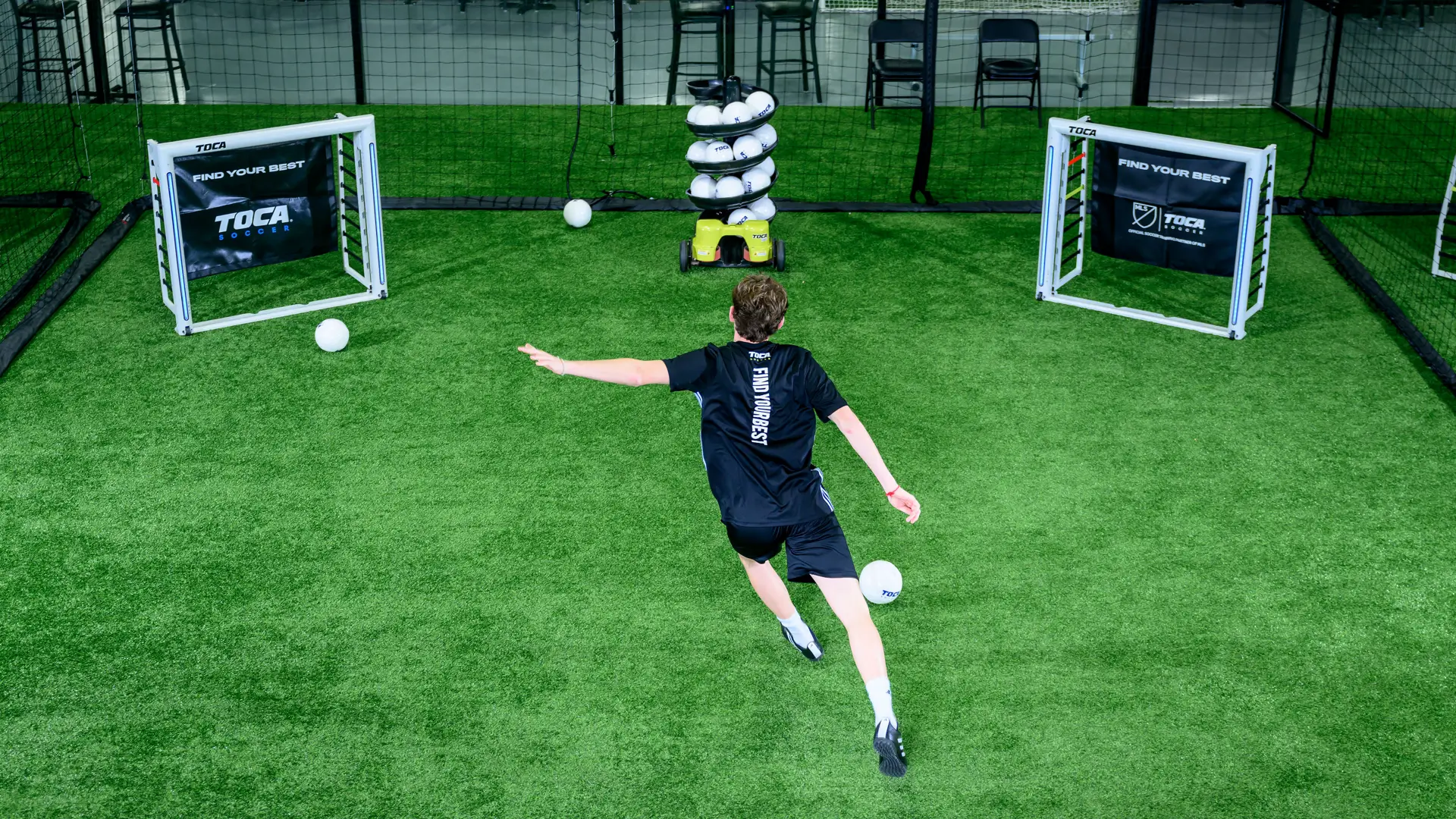
Good shooting drills put players in realistic scenarios: striking after a pass, finishing under pressure, placing shots into specific areas of the goal. Target practice builds the accuracy habits that make a player a genuine threat in front of goal.
At TOCA, Smart Targets create game-like decision-making scenarios so players aren't just shooting at an empty net -- they're reading a situation and reacting, which is what actually happens in matches.
Defensive Drills
Defense is a skill, not an instinct. Jockeying drills teach players to control attackers' movement without overcommitting. Positioning drills build the spatial awareness to anticipate where the ball is going and get there first.
The mental side of defending is what most youth players haven't developed yet: reading the game, staying disciplined under pressure, and knowing when to tackle versus when to hold. Drills that simulate those decisions, repeatedly, are how defensive instincts get built.
Small-Sided Games
Small-sided games are where drills translate into real soccer. With fewer players on a smaller field, every player is constantly involved -- touching the ball more, making more decisions, communicating more.
These games bridge the gap between isolated skills and actual match play. Players learn to apply what they've practiced under pressure, in unpredictable situations, with teammates and opponents moving around them.
A session that ends with small-sided games is a session where the skills actually stick.
How TOCA Puts It Together
The drills above are effective on their own. But what makes training at TOCA different is the combination of high repetition, personalized feedback, and technology that creates game-like conditions every session.
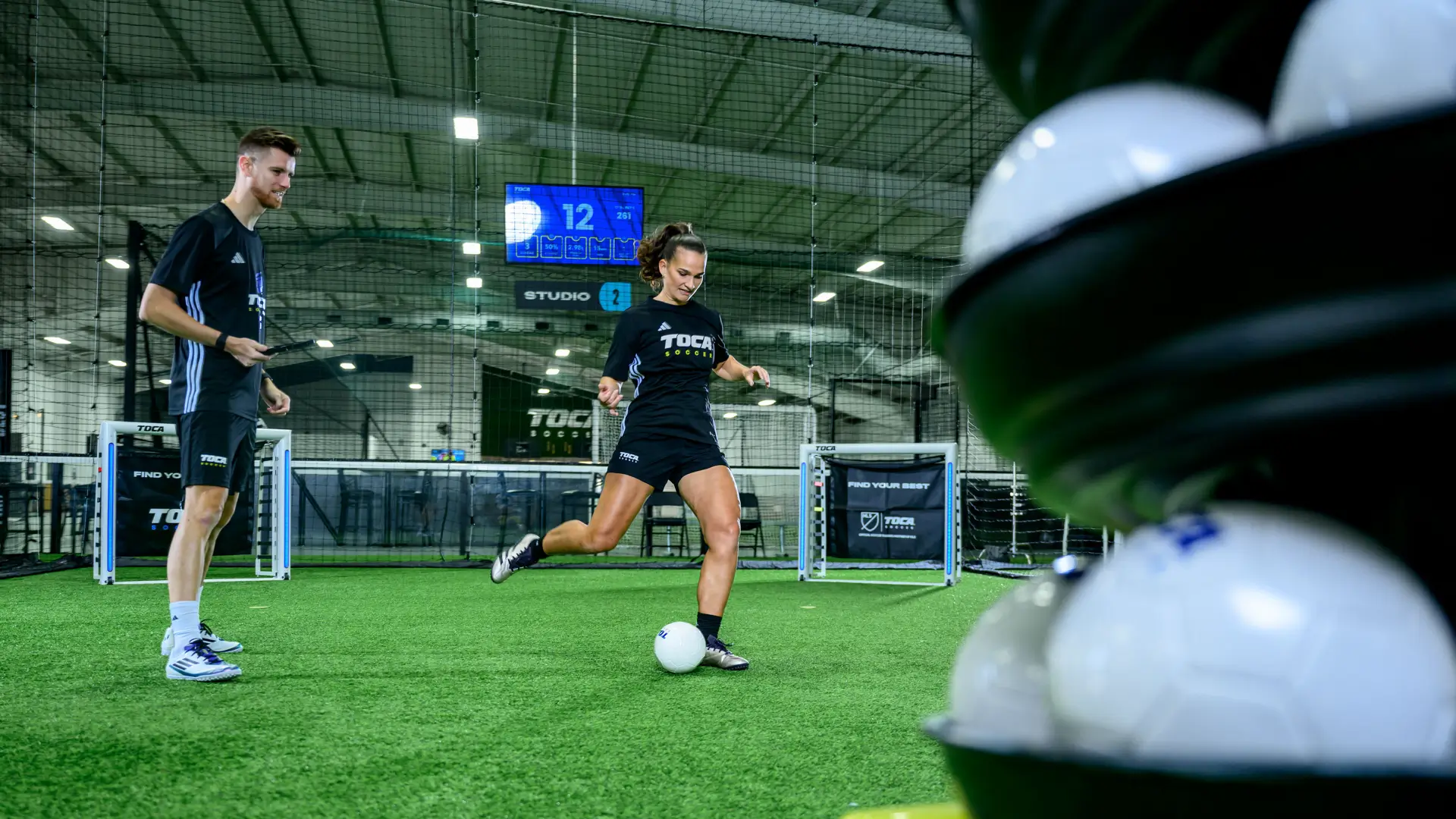
TOCA's private training sessions for players ages 7 and up are led by experienced trainers -- lifelong soccer players, many of them current or former professionals -- who adjust every session to the player in front of them. Whether your player needs to sharpen their first touch, develop their finishing, or build confidence on the ball, there's a plan for it.
First session is free. Come see what focused training actually looks like.
Book your free first session at TOCA Soccer →
TOCA serves local communities throughout the United States and Canada, welcoming players and families to find their best through classes, training sessions, camps, leagues, and more. Soccer classes for ages 1-13 are engaging and educational, while individual or group training sessions for ages 7+ offer progressive levels of development for players looking to challenge themselves and have fun.