Soccer Stretching Routine: Before and After You Play
Most players don't skip training. But a lot of them skip stretching, or rush through it so fast it barely counts.
That's a problem. Soccer puts serious demands on your hips, hamstrings, groin, and calves. Without a proper routine before and after you play, those muscles stay tight, recovery takes longer, and injuries become more likely over time.
Book a free session at TOCA Soccer→
Before You Play: Dynamic Stretching
Static stretching before activity can actually reduce power output. What you want before a session or match is dynamic stretching -- movements that warm the muscles up while taking them through their full range of motion.
These are the stretches that matter most for soccer players:
Leg Swings
Stand next to a wall for balance and swing one leg forward and back, gradually increasing the range of motion. This loosens the hip flexors and hamstrings, the two muscle groups that take the most punishment in soccer. Do 10-15 swings on each side.
Hip Circles
Stand with feet shoulder-width apart and rotate your hips in a wide circle, both directions. Soccer requires constant changes of direction, and mobile hips make those movements faster and safer. 10 circles each direction.
High Knees
Walk or jog with exaggerated knee lifts, driving each knee up toward your chest. This activates the hip flexors and gets the heart rate up at the same time. 20-30 meters is plenty.
Lateral Shuffles
Shuffle sideways in a low defensive stance, leading with one foot and following with the other. This warms up the groin and inner thighs, areas prone to strains in soccer. Two sets of 10-15 meters each direction.
Ankle Rolls
Lift one foot off the ground and rotate the ankle in both directions. Ankle mobility is critical for first touch, shooting, and landing after headers or aerial challenges. 10 circles each direction per foot.
After You Play: Static Stretching
Once the session is over and your muscles are warm, this is the right time for longer, held stretches. Static stretching after activity helps muscles recover, reduces soreness, and maintains the flexibility you need to keep playing consistently.
Standing Quad Stretch
Stand on one leg, pull the opposite foot toward your glutes, and hold for 30 seconds each side. Tight quads are common in soccer players and contribute to knee pain if left unaddressed.
Seated Hamstring Stretch
Sit on the ground with both legs straight out in front of you. Hinge at the hips and reach toward your feet, keeping your back flat. Hold for 30 seconds. Tight hamstrings are one of the most common causes of injury in soccer -- this stretch is non-negotiable.
Hip Flexor Lunge
Step one foot forward into a lunge, lower your back knee to the ground, and shift your weight forward until you feel a stretch in the front of the back hip. Hold 30 seconds each side. Hip flexors get extremely tight from sprinting and kicking, and this stretch directly counteracts that.
Inner Thigh Stretch (Butterfly)
Sit with the soles of your feet together, knees out to the sides, and gently press your knees toward the ground. Hold for 30 seconds. The adductors are heavily used in soccer and often overlooked in recovery.
Calf Stretch
Stand facing a wall, place one foot back with the heel flat on the ground, and lean forward. Hold 30 seconds each side. Tight calves contribute to Achilles issues and ankle instability -- two things no soccer player wants to deal with.
Pigeon Pose
From a hands-and-knees position, slide one knee forward and extend the other leg back behind you. Lower your upper body over the front leg and hold for 30-45 seconds each side. This is one of the most effective stretches for the glutes and deep hip rotators, which work hard in every change of direction.
How Long Should You Stretch?
Five to ten minutes of dynamic work before, and ten to fifteen minutes of static stretching after. That's it. The investment is small relative to the benefit -- and relative to the time you'll lose if a preventable injury takes you off the field.
Keep Building on the Field
A good stretching routine gets your body ready to train. What you do with that training is where TOCA comes in.
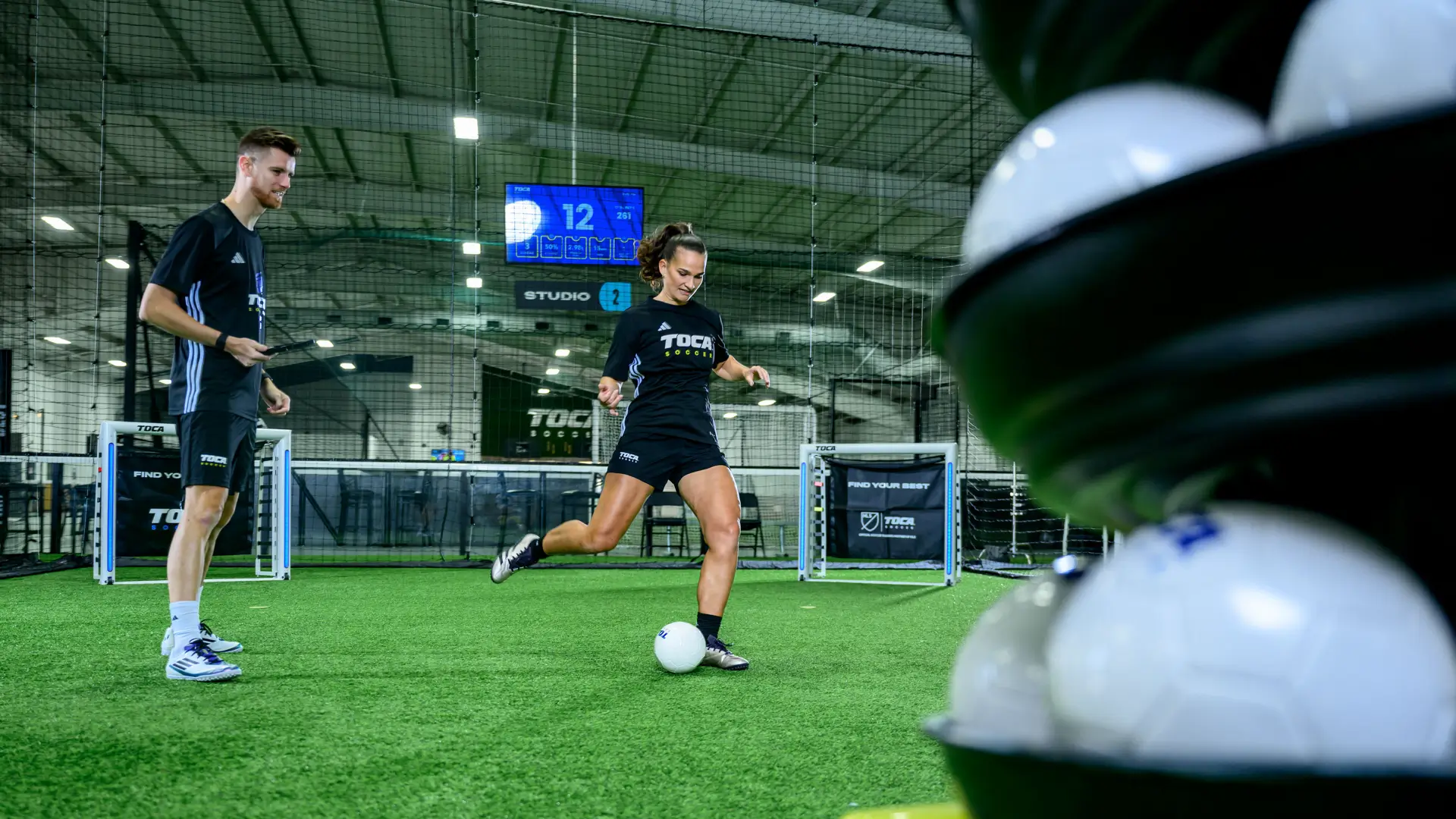
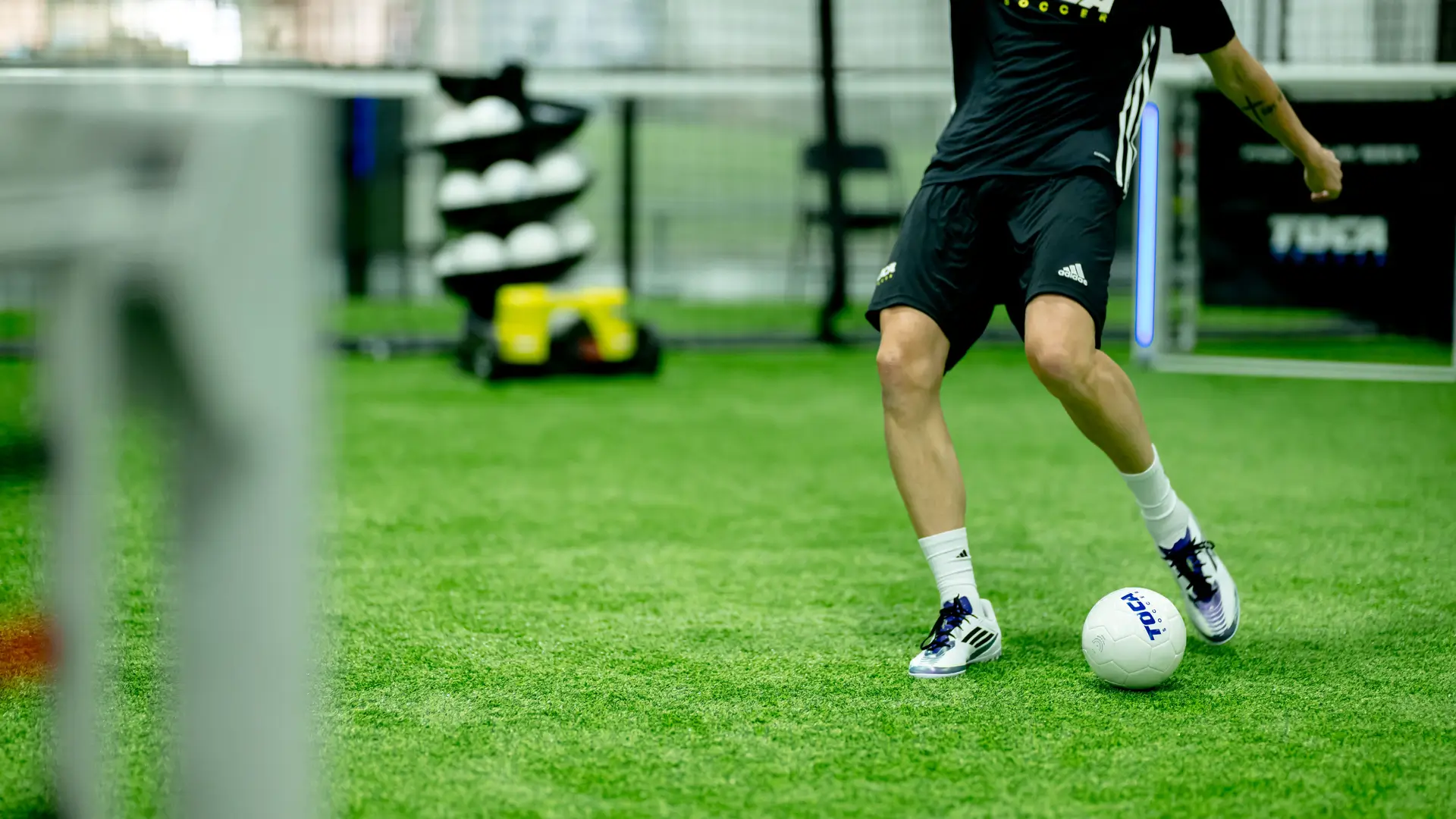
TOCA's private training sessions are built around high-volume, game-realistic reps. Players average around 200 touches per session using the Touch Trainer, roughly 10x what you'd get in a typical match. Show up loose and ready, and those reps go further.
TOCA serves local communities throughout the United States and Canada, welcoming players and families to find their best through classes, training sessions, camps, leagues, and more. Soccer classes for ages 1-13 are engaging and educational, while individual or group training sessions for ages 7+ offer progressive levels of development for players looking to challenge themselves and have fun.