Soccer Positions Explained: A Guide for Players and Parents
How Soccer Positions Are Organized
Every soccer team has three main layers: defenders, midfielders, and forwards. Add a goalkeeper in front of the net and you have all four building blocks of the game.
Coaches arrange these positions into different formations depending on their style of play. But no matter the formation, the basic roles stay the same. Defenders protect the goal, midfielders connect the team, and forwards create chances to score.
Here's a closer look at what each position actually does.
The Goalkeeper
The goalkeeper is the only player who can use their hands, and they're the last line of defense before the opposing team scores. Keepers need quick reflexes and strong communication skills since they direct the entire defense from behind.
Great goalkeepers aren't just shot-stoppers. They read the game, organize their teammates, and start attacks with smart distribution.
Defenders
Defenders work in front of the goalkeeper to prevent the other team from getting clean looks at goal. There are a few types worth knowing.
Center Backs
Center backs sit in the middle of the defensive line. They're usually strong, composed, and good in the air. Two center backs often partner together and are the backbone of the defense.
Fullbacks
Fullbacks play on the left and right sides of the defense. They mark the opposing team's wingers and, in the modern game, often push forward to join attacks down the flanks.
Midfielders
Midfielders are the connective tissue of the team. They link defense to attack, win the ball back in the middle of the pitch, and often cover the most ground of any player on the field.
Holding and Defensive Midfielders
Holding or defensive midfielders sit just in front of the center backs, breaking up plays and recycling possession to keep attacks going.
Box-to-Box Midfielders
Box-to-box midfielders do a bit of everything, contributing both defensively and offensively as the game demands.
Attacking Midfielders
Attacking midfielders play closer to the forwards and are often the most creative players on the team. They set up goals, find space in tight areas, and make things happen.
Forwards and Wingers
Forwards are the goal-scorers. Their job is to get into dangerous positions, create chances, and finish.
Strikers
Strikers play centrally and focus on scoring. They need to be sharp, decisive, and comfortable with the ball under pressure.
Wingers
Wingers play out wide on the left and right sides of the attack. They use speed and dribbling to beat defenders and deliver crosses into the box. In the modern game, wingers are often among the most exciting players to watch.
Does Your Kid Have to Pick a Position?
Not right away, and honestly, the earlier they try everything, the better. Young players who play multiple positions develop a better all-around feel for the game. A defender who understands what a striker needs, and a midfielder who has played goalkeeper once or twice, sees the game differently.
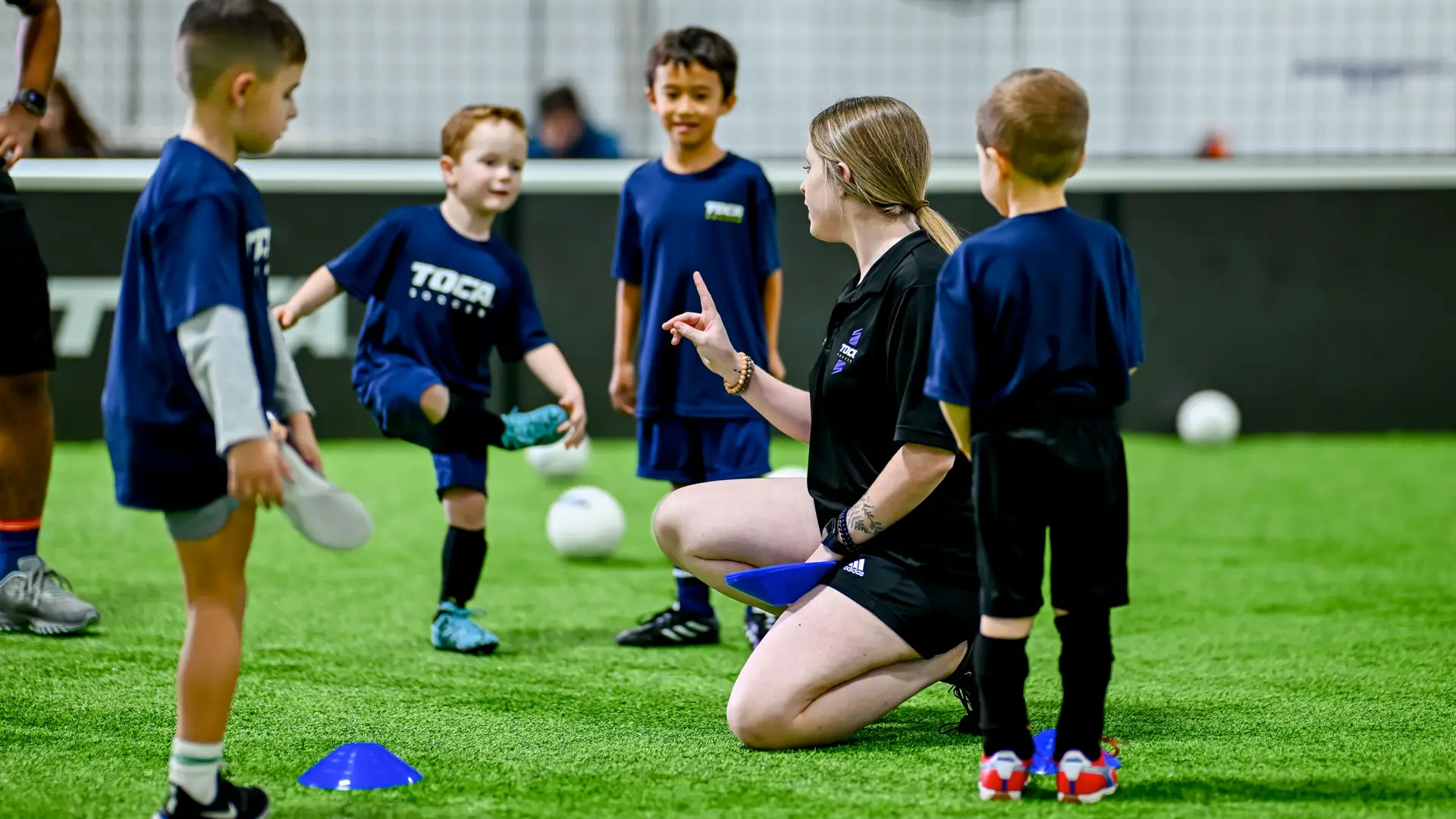
At TOCA Soccer Classes, kids ages 1 to 13 get to explore the game in an environment that's built around fun first. The curriculum is age-appropriate, coaches are encouraging, and every session is designed to build confidence alongside skill, wherever your player is on the field.
First class is free. Come see what it's all about →
TOCA serves local communities throughout the United States and Canada, welcoming players and families to find their best through classes, training sessions, camps, leagues, and more. Soccer classes for ages 1–13 are engaging and educational, while individual or group training sessions for ages 7+ offer progressive levels of development for players looking to challenge themselves and have fun.