Can 2-Year-Olds Play Soccer? Here's What the Science Says
Do 2-Year-Olds Really Benefit From Playing Sports?
It's a fair question. Toddlers aren't exactly tactically aware. But early sports participation isn't about getting good — it's about getting going.
Brain development is most rapid between ages 2 and 5. Movement-based activities like soccer directly support the neural pathways forming during that window. Physical activity also helps kids sleep better, manage their energy, and build the kind of body awareness that makes everything easier as they grow.
The benefits aren't hypothetical or distant. They show up quickly — in how your child moves, focuses, and interacts with others.
Physical Development: Building a Stronger, More Capable Body
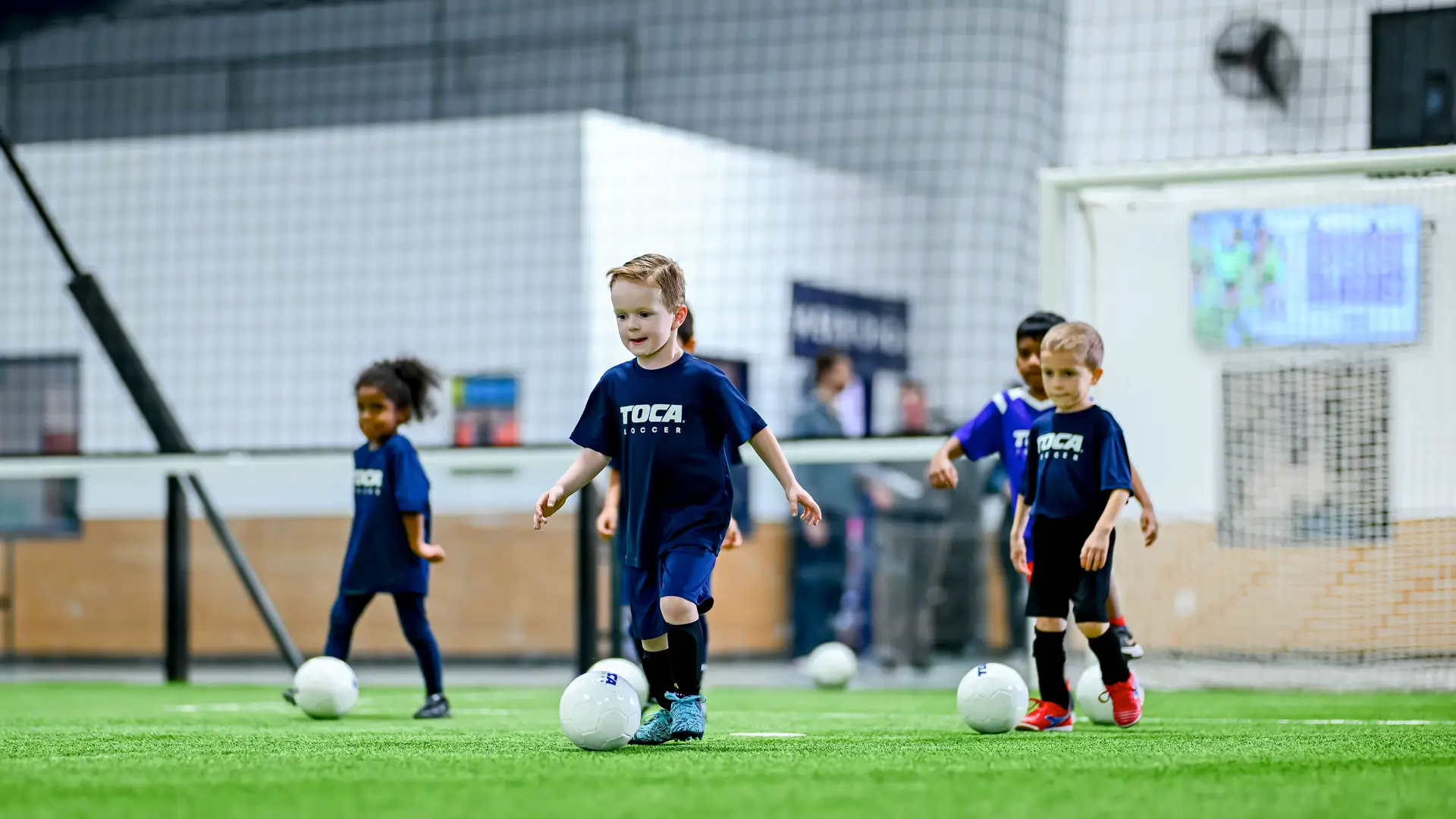
Running, stopping, kicking, and chasing a ball sounds simple. For a 2-year-old, it's a full-body workout that trains skills they'll use for the rest of their life.
At this age, every sprint develops the cardiovascular system. Every kick builds lower-body strength and spatial awareness. And all that running and jumping teaches proper breathing and movement patterns that carry over into any sport they play later on.
Kids who get active early tend to be more physically capable as they get older — not because they practiced more, but because they started building the foundation sooner.
Brain Development: More Than Just Kicking a Ball
Soccer asks a lot of young minds — even at 2. Following simple rules, understanding cause and effect, watching what other players do and reacting — these are all cognitive tasks happening in real time.
That kind of structured-but-fun challenge is exactly what developing brains need. It builds attention span, impulse control, and early problem-solving skills. These aren't abstract benefits; they're the same skills that help kids listen in class and make friends on the playground.
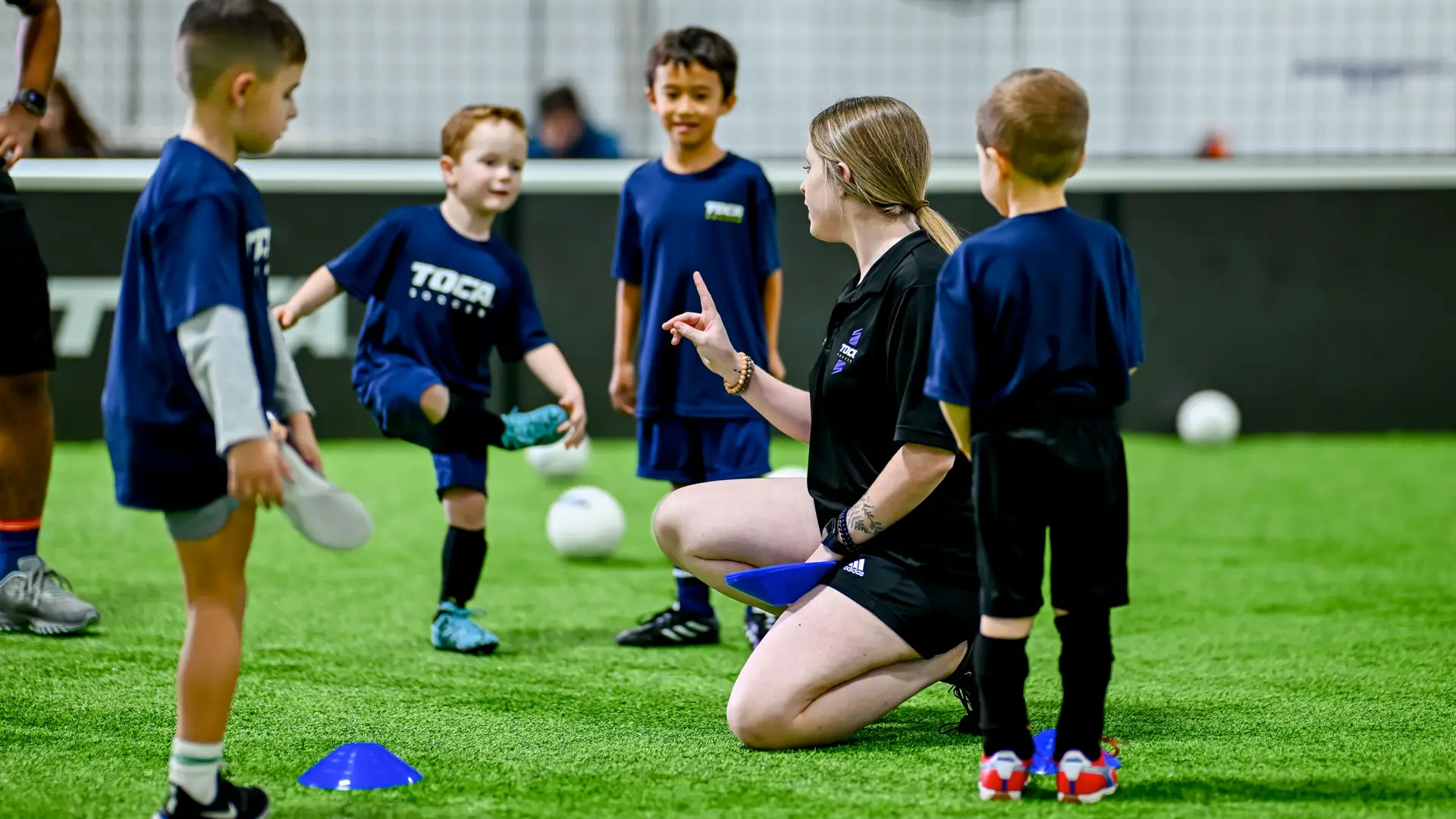
At TOCA Soccer, classes for young players are designed around age-appropriate activities that meet kids where they are developmentally — and gently push them forward.
Coordination, Balance, and Body Control
Watch a 2-year-old kick a ball for the first time. Then watch them do it a month later. The difference is real — and it happens fast.
Kicking and stopping a ball builds 3-dimensional coordination that's genuinely hard to replicate any other way. It trains kids to understand where their body is in space, how to control their momentum, and how to time their movements to a moving target.
These aren't just soccer skills. They transfer directly to swimming, gymnastics, dance — any physical activity your child takes on next.
Decision-Making and Social Skills
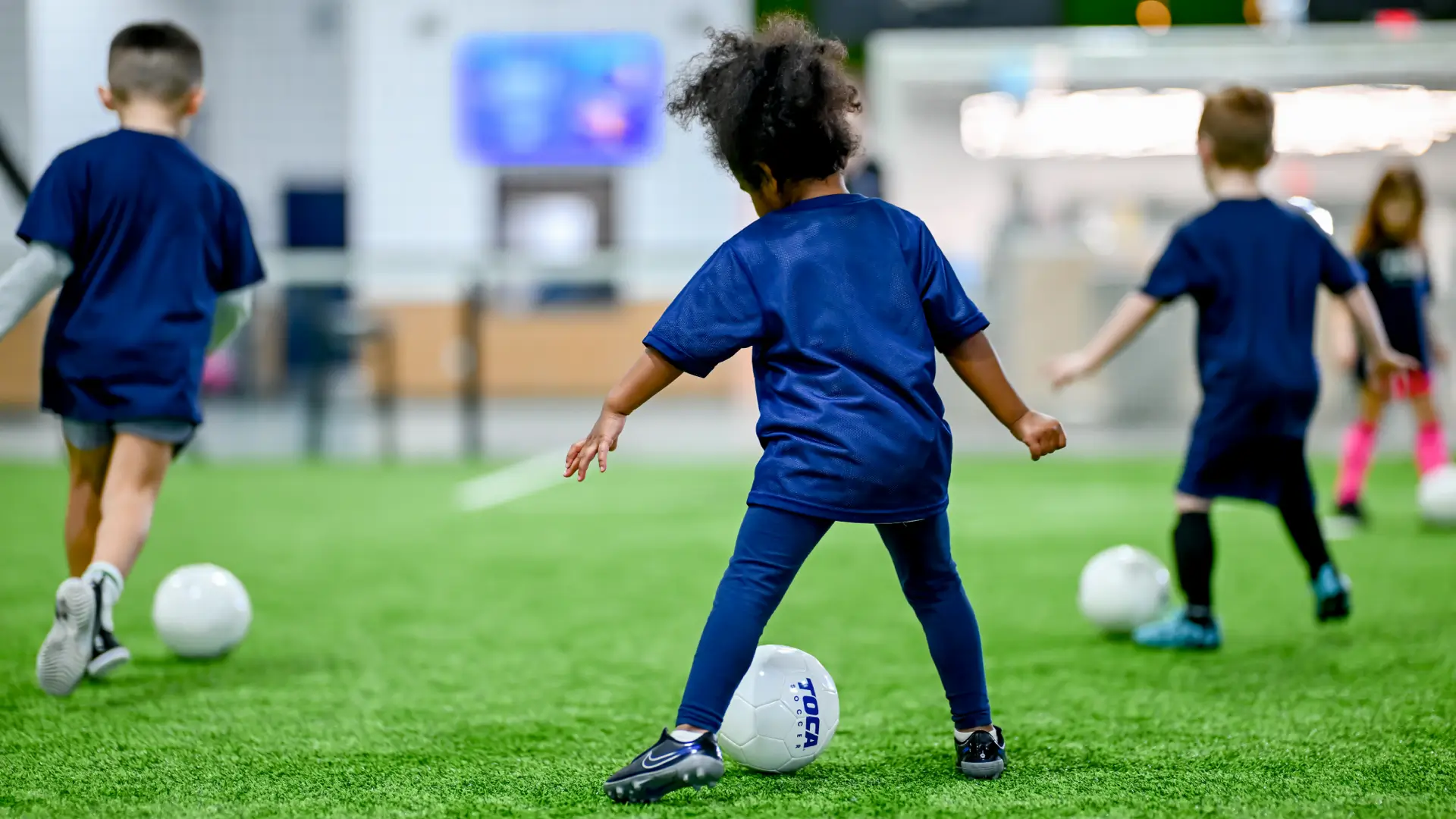
Soccer is a social sport. Even at the earliest ages, kids are learning to share space, take turns, and read other people — all while having fun.
Playing alongside other kids builds the same communication and teamwork skills that matter in every area of their life. And because soccer naturally creates situations where players have to make quick, low-stakes decisions (where should I kick this? who should I go to?), it builds the kind of adaptable thinking that serves kids well in school and beyond.
For parents, there's a bonus: TOCA's classes create a natural community for families too. It's a shared experience that tends to lead to real friendships — for kids and the adults cheering them on.
Confidence and Happiness
There's a moment that every soccer parent knows: the first time their kid connects with a ball and lights up. It's not about the technique. It's about the feeling — I did that.
That sense of physical accomplishment builds genuine self-confidence. Kids who feel capable in their bodies tend to try more things, take more social risks, and recover faster from setbacks. Soccer gives them a safe, fun environment to experience all of that early.
Being part of a team — even a loose one at age 2 — also supports belonging. And belonging supports happiness in ways that screen time simply doesn't.
How TOCA Soccer Gets Young Players Started
TOCA Soccer's classes for ages 1–13 are built around one idea: kids learn best when they're having fun. Sessions are structured, but never rigid. Coaches focus on joy and foundational skill-building in equal measure — keeping kids engaged, encouraging creativity, and making sure every player feels like they belong.
There's no pressure, no perfectionism, and no "wrong way" to play at this age. The goal is simple: get kids loving the game early, so they never want to stop.
The earlier they start, the longer they get to love it. There's no better time to begin than right now.
Sign them up for their first class free →
TOCA serves local communities throughout the United States and Canada, welcoming players and families to find their best through classes, training sessions, camps, leagues, and more. Soccer classes for ages 1–13 are engaging and educational, while individual or group training sessions for ages 7+ offer progressive levels of development for players looking to challenge themselves and have fun.